Alex Grey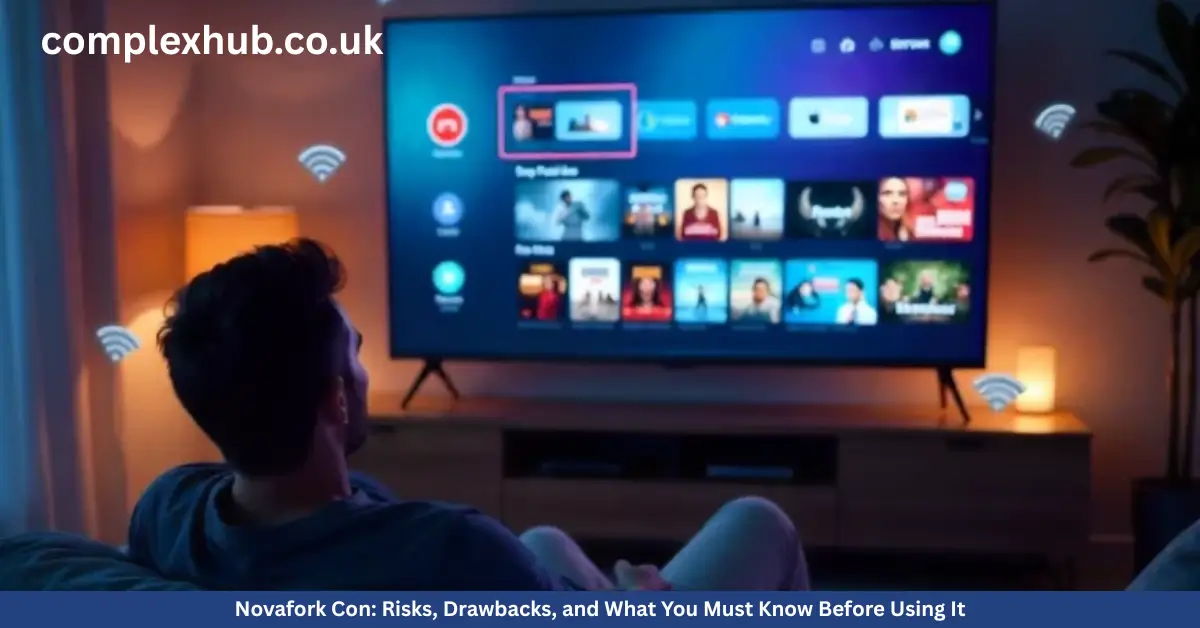
Introduction
Novafork — a clean, browser-based free streaming experience touted for 4K playback, no signup, and a huge library — sounds like a dream for budget-conscious viewers. But every nearly-free streaming site carries tradeoffs. This article digs into the cons of Novafork: legal risks, malware and privacy hazards, link and domain instability, content quality problems, and the ethical implications of using such services. I’ll back claims with recent industry data and user-report evidence, explain why people still use Novafork, and give practical steps to reduce risk if you experiment with it.
Key load-bearing facts in this article draw on independent site scans and reporting (ScamAdviser, TechCropping, DigitBin) and industry research into piracy harms and malware risks. Where the public record is limited, I clearly call out uncertainty rather than speculate.
What Is Novafork? (Brief Recap)
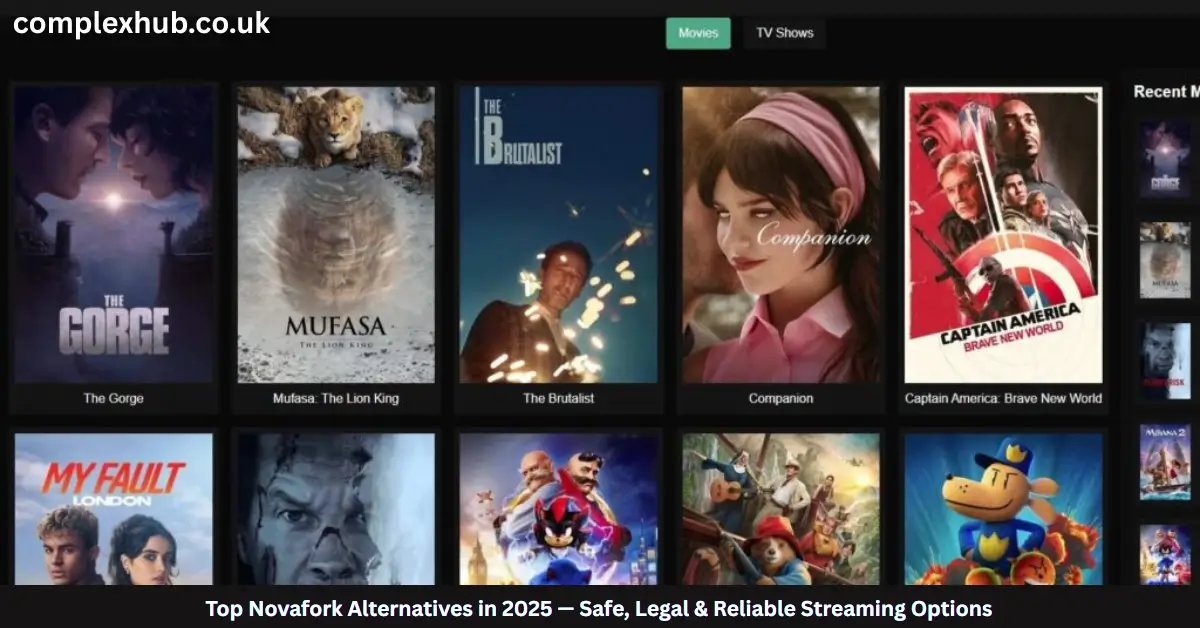
Novafork is described across reviews as a free, browser-based streaming indexer: it aggregates links to movies, TV shows, and anime and presents them in a neat, searchable interface that claims support for HD and 4K playback without sign-up. The site’s appeal is speed and simplicity — open your browser, pick a title, and stream. Several consumer tech writeups show Novafork rising in popularity in 2024–2025 among users frustrated by subscription costs.
That convenience, however, is exactly where the cons start: Novafork often links to third-party hosts (not owned by Novafork), may present aggressive ads or redirectors, and exists in a legal gray area in many jurisdictions. Later sections unpack each problem.
Key Cons & Risks of Using Novafork
Below are the core disadvantages users encounter when using Novafork or similar free streaming indexers.
Legal & Copyright Risks
What’s at stake: Many free streaming sites serve unlicensed copies of films and shows. The Motion Picture Association and other industry groups continue to list rogue streaming sites among the most serious piracy threats. Users who stream from unlicensed sources are typically not targeted individually in enforcement actions, but the legal and ethical burden remains: the content is distributed without studio permission, and operators face takedowns, domain seizures, or lawsuits.
Real-world implications: While enforcement tends to focus on site operators and distribution networks, there are scenarios where users can be at risk — for example, if they download content, redistribute it, or use the site to access infringing content in countries with strict anti-piracy laws. Additionally, prolonged use of illegal streams can expose you to other legal entanglements (fraudulent payment requests, phishing forms posing as verification). Tech guides caution that Novafork and similar services sit in a legally uncertain space and encourage users to prefer licensed alternatives.
Security & Malware Risks
Malware exposure is real. Independent studies show pirate streaming sites are a meaningful vector for malware and unwanted software. A 2025 study summarized by TorrentFreak found significant malware problems on pirate sites and warned that users visiting these services are at higher risk than those on legitimate platforms. The hazards usually come not from the player itself but from malicious third-party ad networks, fake download buttons, and redirects that deliver installers or scripts.
Novafork signals: Reviews and safety tests (DigitBin, TheCraveMagazine, CoopMagazine) repeatedly warn that while Novafork’s core site may not directly install malware, it commonly serves ads and popups that can redirect users to unsafe pages or trick them into installing fake “codecs” and apps. That means the browsing path — not just the video player — is risky.
Bottom line: If you don’t have robust ad-blocking, script control, and up-to-date anti-malware software, you’re exposing your device and data to avoidable threats.
Domain Instability & Accessibility Issues
Why it happens: Free streaming indexers frequently change domains or use mirror sites to evade takedowns, ISP blocks, or domain registrar actions. That means a URL that works today may be gone tomorrow. Users looking for a stable service will face downtime, broken links, and confusion about which site is official. Community threads (Reddit and help forums) often share the current “working” mirrors, but they can themselves be unsafe clones.
Consequences: Domain churn increases phishing risk (fake “Novafork” clones) and reduces long-term reliability. If you rely on the service for regular viewing, domain instability makes it an inconsistent, fragile solution.
Poor Quality, Broken Links & Stream Failures
Third-party dependence: Novafork aggregates links — many of which point to external hosts. Those links can be dead, geoblocked, or of poor resolution. Users commonly report dead streams, missing episodes, or mismatched metadata (title lists that don’t match available files). Community reviews frequently cite “broken link” complaints and inconsistent availability.
UX fallout: Frequent playback failures or mislabelled files degrade the viewing experience and lead to wasted time chasing working links — the opposite of the “instant streaming” promise.
Privacy Concerns & Data Exposure
Tracking & logging: Free streaming sites often rely on ad networks and trackers to monetize visits. That means your IP address, browser fingerprint, and sometimes geographic location are exposed to third parties. Without clear privacy controls or transparency, users can’t know which networks receive their browsing data. Reviews recommend viewing Novafork as non-privacy-preserving unless used behind protective tools like a VPN and privacy-oriented browser settings.
Risk of account phishing: Some clones or malicious popups may solicit email addresses or “verification” that phish credentials. Even if Novafork itself doesn’t ask for personal data, imitators might.
Ad Overload & Intrusive User Experience
Ad model tradeoffs: Free sites monetize heavily through advertising. Good ad partners are rare for pirate sites, so operators may rely on lower-quality ad networks that serve aggressive popups, interstitials, and deceptive “install to continue” banners. Several reviews of Novafork call out intrusive ad behavior as a core downside that harms usability and increases malware risk.
User fatigue: One of the reasons people try Novafork (no signup) is undermined when the site repeatedly interrupts playback with ad overlays or redirects.
Case Studies & User Reports
- Site trust score: ScamAdviser’s scan assigns Novafork a moderate trust rating (for example, a 60s-range score in their tests), indicating some positive signals but also a mix of risk indicators typical for free streaming domains (short domain age, mixed server locations, WHOIS privacy). Such scans don’t prove malware or illicitness, but they reflect detectable warning flags.
- Independent reviews: TechCropping and DigitBin’s hands-on articles list real issues: pop-ups, some links to suspect hosts, and the ongoing risk of clones and mirror domains. They explicitly recommend caution and highlight safer legal alternatives.
- Community chatter: Reddit and piracy forums often circulate “working” Novafork links but also repeatedly flag downtime and fake mirrors; community moderation frequently warns users about phishing domains and to prefer trusted alternatives.
- Malware research: The TorrentFreak-cited study shows pirate sites carry much higher malware rates than legitimate streaming services — an industry observation that reinforces caution when visiting Novafork or its clones.
Why People Still Use Novafork — Weighing Pros vs Cons
Understanding why Novafork attracts users helps explain why it persists despite clear downsides.
- Subscription fatigue: Consumers juggle multiple streaming subscriptions; the out-of-pocket cost can be substantial. Free indexing sites promise “everything in one place,” which is psychologically powerful.
- Content fragmentation: Exclusive titles on different platforms push viewers to search for a single portal that aggregates links.
- Ease & speed: The frictionless experience (no account, instant playback) is compelling for casual viewers.
However, those benefits are weighed against legal, security, and privacy costs. For many users, the “free” aspect isn’t worth potential device compromise or ethical concerns about creators’ rights.
Safer Alternatives to Novafork
If your goal is free or low-cost viewing without high risk, consider these legal options:
- Ad-supported, legal platforms: Tubi, Pluto TV, Crackle, Roku Channel. These offer licensed content with ads and do not expose you to the same malware risk.
- Library & public domain: Many classics are legally available through Internet Archive, Kanopy (library card required), or local library streaming services.
- Trial rotation & bundle management: Rotate free trials or consolidate subscriptions (family plans) to lower monthly spend.
- Official free tiers: Some studios and streamers have limited free windows or promotional codes; sign up for newsletters from trusted services to catch deals.
- Purchase or rent selectively: For must-see, newly released content, renting or purchasing avoids legal and security headaches and helps creators.
Reviews recommending these alternatives stress that while they’re not “everything for free,” they remove major risk vectors associated with pirate indexers like Novafork.
How to Minimize Risks If You Experiment with Novafork (Cautious Use Tips)
If you still want to explore Novafork despite the cons, follow harm-reduction practices:
- Use a strong ad-blocker + script blocker: uBlock Origin + NoScript (or equivalent) reduces redirects and malicious script execution.
- Run an up-to-date antivirus and anti-malware suite: Real-time protection helps stop drive-by downloads and suspicious installers.
- Browse in a sandbox / isolated VM: Power users can run risky sites in a virtual machine or sandboxed browser to limit system access.
- Use a reputable VPN: A VPN protects your IP and location from being trivially logged; it does not make illegal activity legal but adds privacy.
- Never click “download” prompts or fake codec installers: Media players asking for weird plugins are red flags.
- Avoid entering personal info or payment details: Legitimate streams don’t require your credit card for playback.
- Verify domain authenticity: Prefer official, static domains (if any) and avoid random mirrors; check ScamAdviser or Safe Browsing lists first.
These steps don’t eliminate risk but lower it materially.
Legal & Ethical Considerations
Using Novafork implicates both legal and ethical questions:
- Creators and revenue: Piracy undermines the revenue streams that pay writers, actors, and crews. Industry losses from piracy are estimated in the tens of billions annually, and streaming theft remains a major concern for rights holders. That macroeconomic harm trickles down to fewer resources for new content.
- Your moral calculus: Some users justify casual streaming on the basis that they wouldn’t have paid anyway. Others view it as an unfair extraction of value. There’s no single correct answer, but being informed about the real economic consequences matters.
- Regulatory trends: Governments and industry coalitions are stepping up enforcement and technological countermeasures (domain takedowns, ISP blocking, anti-piracy tech). Relying on a pirate index is a bet against a trend of increasing friction and enforcement.
Future Outlook — Will Novafork Survive?
Novafork’s viability depends on several pressures:
- Legal enforcement: The MPA and similar bodies continue to prioritize takedowns and tracking of major pirate hubs. If Novafork becomes highly visible or tied to large content theft networks, it will face pressure.
- Ad network reliability: If reputable ad networks refuse to work with such sites, operators must rely on lower-quality networks that increase user risk.
- Tech responses: More affordable, user-friendly official offerings and bundles could reduce demand for pirate indexers. Conversely, if subscription fragmentation worsens, demand could rise.
- Open-source alternatives: Some projects experiment with decentralized or open-source streaming, but these carry their own legal and security complexities.
Overall, while Novafork and similar sites will likely persist in some form, expect instability, periodic takedowns, and continuous risk for users.
Final Thoughts
Novafork’s promise — a tidy, signup-free, high-quality stream library — is attractive, especially during subscription fatigue. But the cons are real: legal risk, malware exposure through third-party ads, domain instability, broken links, privacy leakage, and intrusive ad experiences. Independent site scans, safety reviews, and academic studies about piracy-site malware support a cautious approach. If you value long-term device security, privacy, and ethical consumption, licensed alternatives (ad-supported or affordable subscription strategies) are a smarter path.
If you do sample Novafork, use strong ad-blocking, anti-malware, sandboxing, and a VPN; otherwise, the small short-term “free” gain can create outsized long-term costs.
FAQs About Novafork (Con-Focused)
1. Is Novafork illegal or a pirate site?
Novafork is an indexer that links to third-party streams. Many of those streams are unlicensed. While using the site to stream may not trigger prosecution in most countries, it exists in a legal gray area and is often considered part of the piracy ecosystem. Enforcement tends to target operators, but legal risk isn’t zero.
2. Is Novafork safe from malware?
No site is guaranteed safe. Independent reviews warn Novafork may expose users to malicious ads and redirects; studies show pirate sites carry higher malware risk than legitimate platforms. Use ad-blocking and anti-malware if you visit.
3. Why does Novafork sometimes go offline?
Free streaming indexers frequently change domains to evade takedowns, ISP blocks, or payment/hosting issues. Mirror domains and downtime are common.
4. Can I get in legal trouble for streaming on Novafork?
Most users are unlikely to be prosecuted for casual streaming, but downloading, redistributing, or using the site in jurisdictions with strict laws can increase risk. There are also indirect risks (phishing, scam payments) associated with such sites.
5. Are there safer free alternatives?
Yes. Tubi, Pluto TV, Crackle, the Roku Channel, and library services (like Kanopy) offer licensed, free content with far lower risk. They are ad-supported but legal and safer.
6. Will Novafork ever be safe/legal?
Only if it secures licensing agreements and partners with reputable ad networks — a big pivot from the way most free indexers currently operate. That’s possible but would fundamentally change the platform’s model.
Read More :- How Did John Paul Sarkisian Die?