Introduction
The riverbank collapse at Iford Playing Fields has emerged as a significant environmental and public safety concern for residents, visitors, and local authorities near Bournemouth, UK. What initially appeared to be a sudden, isolated event revealed deeper, long-term challenges linked to river erosion, heavy rainfall, vegetation loss, and land management practices along riverside areas.
This article provides a detailed, well-researched overview of the causes, immediate risks, environmental impact, community response, and future stabilization solutions for Iford Playing Fields, offering residents and stakeholders a clear understanding of both the scientific and social context behind the collapse.
Where Is Iford Playing Fields and Why It Matters?
Iford Playing Fields is a popular green space situated between Bournemouth and Christchurch, along the scenic River Stour in Dorset, South West England. The park is widely used for:
- Walking and jogging
- Cycling
- Picnics and family gatherings
- Dog walking
- Informal sports
Its riverfront location provides beauty and recreation but also exposes the park to natural river processes, including flooding and erosion. The playing fields sit on a river floodplain, where the soil is naturally softer, making the area particularly vulnerable to gradual or sudden riverbank failure.
Understanding Riverbank Collapse
What Is a Riverbank Collapse?
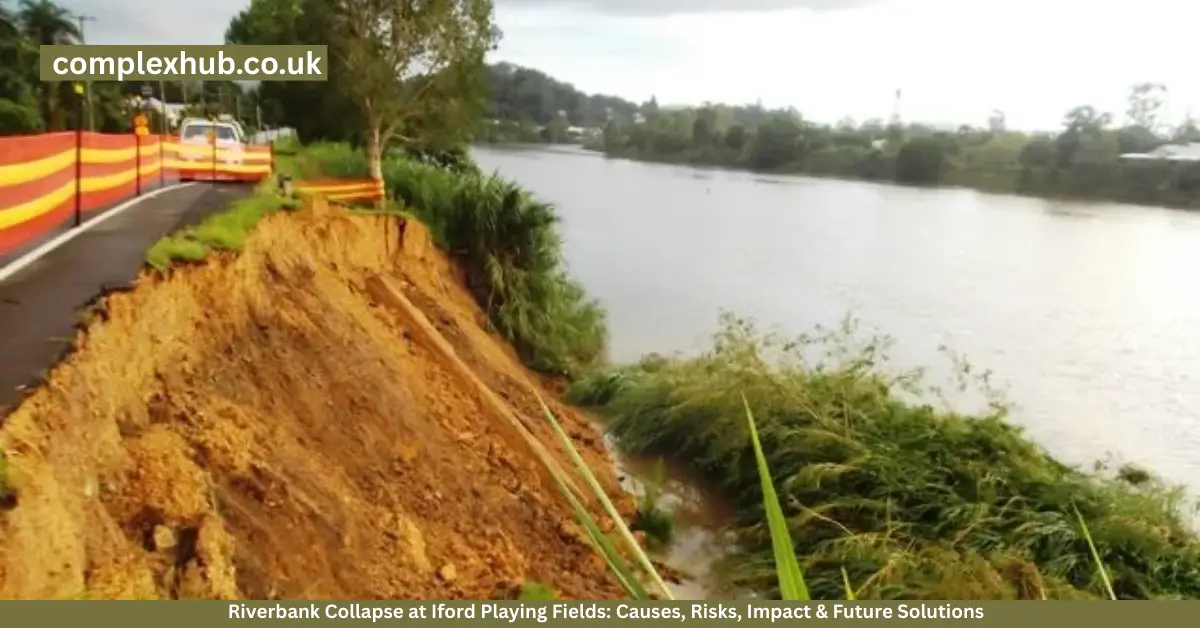
A riverbank collapse occurs when the soil and vegetation supporting the river edge fail under the combined pressures of water flow, soil saturation, and gravity. Unlike gradual erosion, a collapse can happen suddenly, often overnight, causing large sections of land to slump into the river.
Collapsed banks create:
- Steep drop-offs
- Hidden cavities under the soil
- Sudden loss of ground stability
These conditions make the area hazardous for park visitors, particularly children and cyclists.
The Science Behind Riverbank Failure
Riverbanks are composed of layers of soil, clay, sand, and organic matter, often reinforced by vegetation roots. When the base of a bank is eroded by river currents, the upper layers lose support. Heavy rainfall and saturated soil further weaken cohesion, making sudden collapse more likely.
Key contributing factors include:
- Base erosion by flowing water
- Soil saturation from heavy rainfall
- Vegetation loss
- Human activity and foot traffic
Timeline of the Iford Playing Fields Collapse
While exact times vary, the general sequence of events was:
Mid–Late May 2025
- Prolonged rainfall saturated soil
- River levels fluctuated due to weather conditions
Late May 2025
- Strong winds and rising water levels increased pressure on the riverbank
May 27–29, 2025
- A large section of the bank collapsed suddenly, sending soil, trees, and vegetation into the River Stour
Immediately After
- BCP Council installed safety cordons and began monitoring
- Residents expressed concern about the safety and long-term stability of the area
This incident reflects cumulative environmental pressures, rather than a single event.
Causes of the Riverbank Collapse
The collapse resulted from multiple, interacting factors:
1. Heavy Rainfall & Soil Saturation
Extended periods of rain waterlog the soil, reducing cohesion and increasing the risk of collapse under its own weight.
2. Long-Term River Erosion
The River Stour’s natural flow gradually erodes the base of the bank. Undercutting weakens structural support over months or years.
3. Vegetation Loss
Trees and deep-rooted plants anchor the soil. Decayed or removed vegetation reduces stability, making the bank more prone to collapse.
4. Strong Winds
High winds can uproot trees and destabilize soil, increasing the likelihood of a collapse.
5. Human Activity
Heavy foot traffic and soil compaction near the river edge accelerate erosion and reduce natural protection provided by vegetation.
Immediate Risks After the Collapse
Public Safety
The main risk is unstable ground. Hidden cavities and weakened soil can collapse unexpectedly, posing danger to:
- Walkers and joggers
- Cyclists
- Children playing near the river
Risk of Further Collapse
Adjacent areas become vulnerable once a section collapses. Without intervention, additional land could slide into the river.
Threat to Infrastructure
Nearby infrastructure, including roads and a train bridge, may face long-term risks if erosion continues unchecked.
Environmental Impact
Sediment and Water Quality
Fallen soil increases river turbidity, reducing sunlight penetration and harming aquatic plants, fish, and invertebrates.
Habitat Loss
Trees, shrubs, and riparian plants provide shelter and food for wildlife. Their loss disrupts habitats for birds, insects, and small mammals.
Long-Term Ecological Recovery
Restoring vegetation and stabilizing ecosystems can take years, especially for species reliant on mature trees.
Community Impact
Recreational Disruption
Large sections of the park have been fenced off for safety, limiting access for sports, dog walking, and family activities.
Public Concern
Residents expressed frustration over the sudden collapse and slow pace of official communication, calling for clearer information and faster action.
BCP Council Response
BCP Council has undertaken the following:
- Monitoring and assessment of the collapsed bank
- Installation of safety cordons
- Coordination with environmental experts for long-term stabilization
Authorities face the challenge of balancing:
- Public safety
- Environmental preservation
- Recreational access
Is the Area Safe to Visit?
Some parts of Iford Playing Fields remain open, but visitors are advised to:
- Follow warning signs and barriers
- Avoid restricted areas
- Keep away from the river edge
Unstable ground may remain hidden beneath grass and vegetation.
Could Another Collapse Happen?
Yes. Adjacent sections remain at risk without stabilization. Early warning signs include:
- Soil cracking or slumping
- Leaning or uprooted trees
- Changes in water flow along the bank
How Riverbank Collapse Affects Flood Risk
Collapsed banks reduce river channel capacity, potentially increasing flooding downstream during heavy rainfall events.
How Authorities Assess Riverbank Stability
Soil & Structural Surveys
Experts examine:
- Soil composition and moisture
- Slope angle and bank geometry
- Root structure
- Signs of erosion or instability
Community Reporting
Residents often detect early signs of collapse. Reporting cracks, slumps, or unusual water flow helps authorities act proactively.
Short-Term Actions
Authorities implement immediate measures such as:
- Safety barriers and hazard signs
- Temporary closures of vulnerable sections
- Regular monitoring to prevent sudden incidents
Long-Term Stabilization Solutions
Nature-Based Approaches
- Replanting native trees (willow, alder)
- Live willow spiling
- Biodegradable erosion mats
- Riparian vegetation restoration
Engineering Solutions
- Gabion walls (wire mesh filled with rocks)
- Riprap (stone armoring)
- Selective sheet piling
- Structural drainage systems
Climate-Resilient Design
- Raised walkways to protect foot traffic
- Flood-tolerant vegetation
- Improved park drainage
Lessons Learned
| Lesson | Why It Matters |
|---|---|
| Early signs are critical | Small cracks can indicate major risks |
| Vegetation stabilizes banks | Roots reduce erosion and soil movement |
| Public awareness improves safety | Informed visitors avoid danger |
| Regular monitoring prevents surprises | Reduces the chance of sudden collapse |
How Communities Can Help
Residents can support prevention by:
- Reporting early signs of soil movement
- Participating in planting and park stewardship programs
- Communicating concerns to local authorities
Community engagement strengthens resilience and protects shared outdoor spaces.
Frequently Asked Questions (FAQs)
Q: What caused the collapse at Iford Playing Fields?
A: A combination of heavy rainfall, soil saturation, river erosion, vegetation loss, and natural soil instability.
Q: Is the area safe to visit?
A: Some areas are open, but visitors should follow warning signs and avoid restricted zones.
Q: Could another collapse occur?
A: Yes. Stabilization and monitoring are essential to prevent further incidents.
Q: How does a collapse affect flooding?
A: Collapsed banks reduce river flow capacity, increasing flood risk downstream.
Q: What solutions are being implemented?
A: A mix of nature-based restoration (trees, vegetation, erosion mats) and engineered supports (gabions, riprap, drainage systems).
Final Thoughts
The riverbank collapse at Iford Playing Fields highlights the delicate balance between recreation, nature, and public safety. While the collapse was sudden, the underlying causes were long-term and complex.
Protecting riverside green spaces requires understanding natural processes, working with ecosystems, and building resilience for the future. With coordinated efforts from councils, engineers, environmental experts, and the community, Iford Playing Fields can remain a safe, sustainable, and cherished public space for generations to come.
Read More :- Glasgow Water Main Break on Shettleston Road