Alex Grey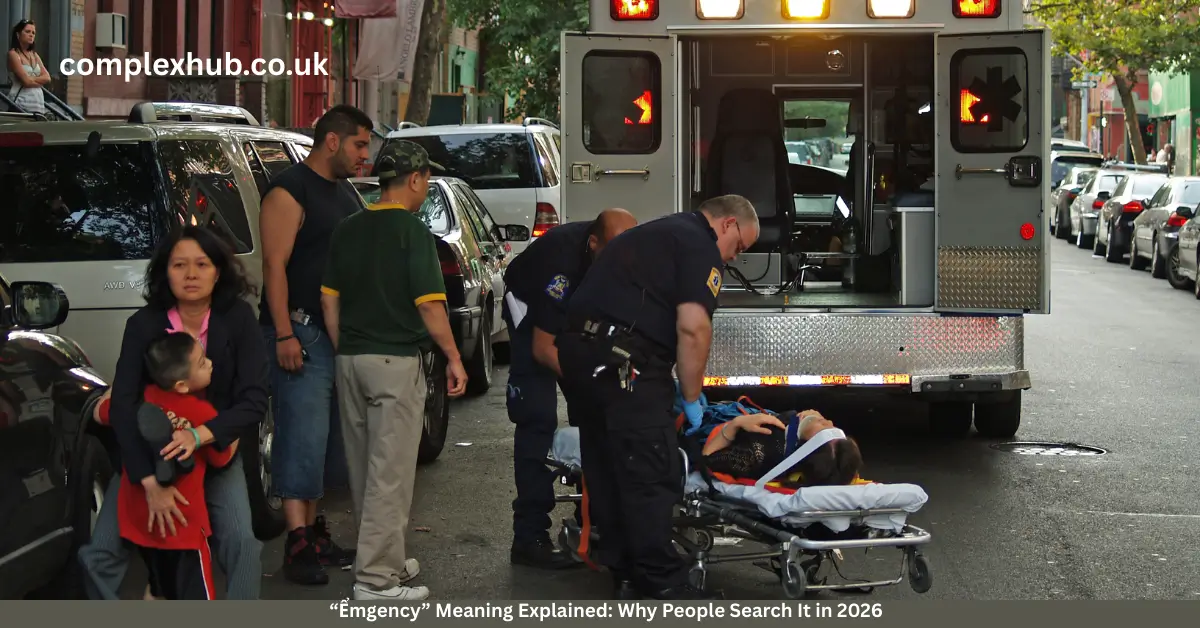
1. Introduction
In 2026, the term “ểmgency” continues to appear across social media, blogs, and search engines. Some think it’s a new word, while others assume it’s a typo.
The reality is simpler: “ểmgency” is not an official word, but it has become widely searched due to human behavior, digital keyboards, and online communication habits.
This guide explains:
- The meaning of “ểmgency”
- Why it appears online
- How it differs from “emergency”
- When it’s appropriate to use
- Why it can harm credibility in serious contexts
2. What Does “Ểmgency” Mean?
Essentially, “ểmgency” means the same thing as “emergency.”
It is a stylized or accidental spelling, often caused by typing errors, autocorrect, or intentional formatting. The accented letter “ể” is not part of standard English.
When someone types “ểmgency,” they usually mean:
- A sudden urgent situation
- A crisis requiring immediate action
- A stressful event needing quick response
The unusual spelling creates curiosity, which explains why it’s frequently searched online.
3. Is “Ểmgency” a Real Word?
No.
- Not recognized in dictionaries or formal English standards
- Considered a typo in professional writing
- Yet, in the age of the internet:
- Mistyped words can trend
- Unusual spellings can become memes
- Non-standard words can gain popularity
In short, “ểmgency” is a digital phenomenon, not a legitimate English term.
4. Why People Keep Typing and Searching “Ểmgency”
4.1 Mobile Keyboard Errors
Multilingual keyboards can create accented letters when holding a key. For example:
- Pressing “e” may show: é, è, ể
- A quick tap can insert “ể” unintentionally
4.2 Copy-Paste Errors
Text copied from PDFs, social media, or websites may carry hidden formatting, including accented letters.
4.3 Social Media Trends
Creators often use unique spellings to stand out. A quirky word catches attention, increasing engagement.
4.4 Curiosity
People see “ểmgency” and wonder about its meaning, prompting searches.
5. Emergency vs Ểmgency: Key Differences
| Word | Use | Clarity |
|---|---|---|
| Emergency | Formal, serious situations | Immediately understood |
| Ểmgency | Stylized or accidental | Can confuse readers |
Meaning is the same, but the impact on clarity differs.
6. Informal and Creative Uses of “Ểmgency”
Though incorrect, “ểmgency” appears intentionally in casual writing:
Examples:
- “My phone battery is at 2%. Total ểmgency.”
- “I forgot my assignment. Ểmgency!”
It is often used to convey emotional urgency rather than real danger.
Social media humor:
- Memes
- Exaggerated panic
- Attention-grabbing posts
7. Where “Ểmgency” Comes From
The accented “ể” exists in languages like Vietnamese, not English. “Ểmgency” arises from:
- Multilingual keyboards
- Autocorrect and predictive text
- Fast typing in urgent situations
8. Why Unusual Spellings Grab Attention
Human brains read word shapes, not individual letters.
- “Emergency” → familiar
- “Ểmgency” → familiar but slightly odd
The subtle difference triggers curiosity, making the word memorable.
9. Emotional Urgency vs Real Urgency
Emotional urgency:
- Deadlines, stress, frustration, social pressure
- Personal panic but not life-threatening
Real urgency:
- Medical emergencies
- Fires, accidents, disasters
- Immediate danger to life or property
“Ểmgency” usually represents emotional urgency, not real crises.
10. Should You Use “Ểmgency”?
Acceptable:
- Social media posts
- Informal blogs
- Humor or memes
Avoid:
- Professional writing
- Medical advice
- Safety instructions
- Official communications
Using it in serious contexts can damage credibility and trust.
11. How “Ểmgency” Can Harm Credibility
Readers may question:
- Professionalism of the writer
- Accuracy of the content
- Reliability of the information
Especially in health, safety, education, or finance, unusual spellings reduce trust.
12. SEO and User Experience Considerations
“Ểmgency” may attract curiosity traffic, but:
- High bounce rates may occur
- Users may feel confused
- Search engines prioritize clarity and relevance
Best practice: Use “emergency” as the main keyword, mention “ểmgency” only when explaining it.
13. Why Clear Language Matters in Real Emergencies
People under stress read slower and scan quickly.
Emergency communication must use:
- Simple language
- Standard spelling
- Clear, direct instructions
Even a slight pause caused by unusual spelling can delay critical action.
14. Responsibility of Writers Using Urgent Language
Words shape perception and behavior. Careless use of “urgent” terms can:
- Create unnecessary panic
- Cause confusion
- Reduce credibility
Ask yourself:
- Will this stress readers unnecessarily?
- Could it be misinterpreted?
- Is the language appropriate for the audience?
15. Common Misconceptions
| Misconception | Reality |
|---|---|
| “Ểmgency” is a new word | No, it’s a typo or stylized version |
| It has a special meaning | No, it generally means “emergency” |
| It’s slang | Not exactly; more a typo or playful spelling |
| Only kids use it | People of all ages use it online |
16. Quick Facts About “Ểmgency”
- Meaning: Same as emergency
- Origin: Typing error or stylized spelling
- Usage: Mostly informal
- Dictionary status: Not recognized
- Causes: Keyboard errors, autocorrect, copy-paste
- SEO impact: Curiosity traffic, low trust
- Best use: Casual content only
17. FAQs
Q1: What does “ểmgency” mean?
A typo or playful version of “emergency.”
Q2: Is it a real word?
No, it’s not recognized in formal English.
Q3: Why do people search for it?
They see it online and wonder about its meaning.
Q4: Can I use it?
Only in casual, informal contexts. Avoid professional or serious writing.
Q5: Why does it appear so often?
Mainly due to multilingual keyboards, autocorrect, and copy-paste formatting.
18. Conclusion
“Ểmgency” is a perfect example of how the internet shapes language.
- It’s not a real word, but widely searched due to typing errors, digital habits, and online trends.
- It generally means the same as “emergency”, but clarity suffers.
- Use “emergency” in serious or professional contexts.
- “Ểmgency” is best reserved for humor, casual posts, or playful communication.
Read More :- Matoketcs