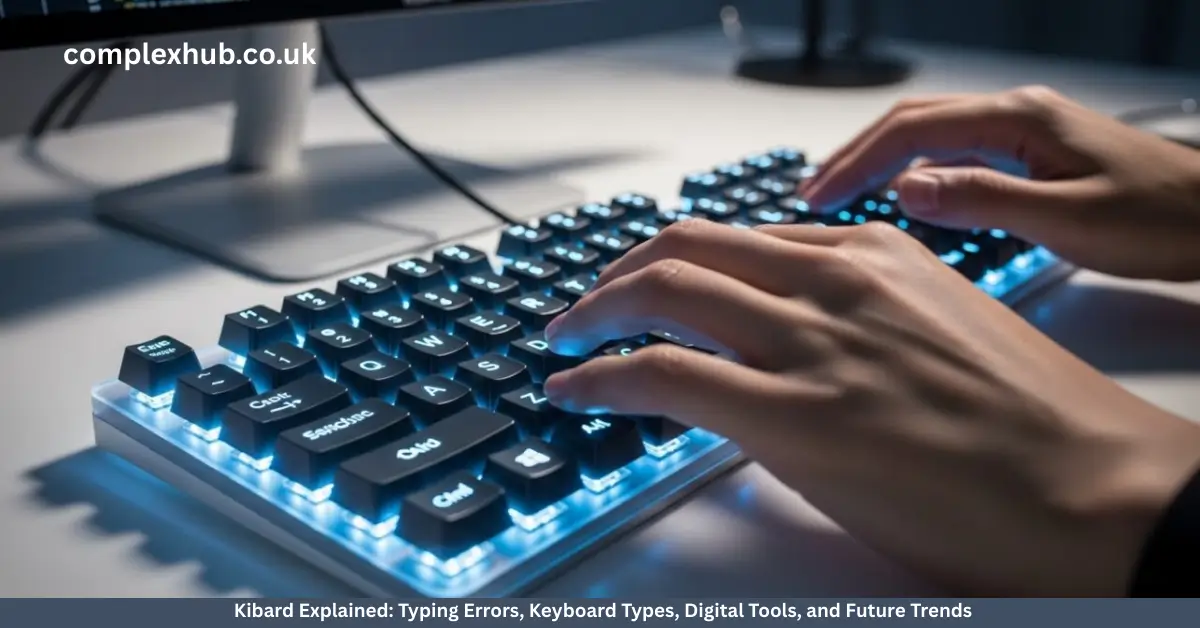
1. Introduction: Understanding “Kibard” and Keyboards
In today’s hyper-digital world, keyboards have become an extension of our minds. They allow us to communicate, work, and play across countless platforms. Yet, even the simplest interactions can go awry. One such phenomenon is the appearance of the term “kibard.” While it may look like an unfamiliar word, “kibard” is simply a common typographical error for “keyboard.”
Misspellings like this reveal not only human typing patterns but also how technology and interfaces influence our communication. From fast-fingered messages to autocorrect mishaps, understanding kibard highlights the challenges of digital typing. This article explores the term thoroughly, examining causes, keyboard types, messaging integrations, and even futuristic innovations.
2. What Is ‘Kibard’? Typographical Errors Explained
Kibard is not a unique concept but a simple misspelling of “keyboard.” It often arises due to:
- Adjacent key presses on QWERTY layouts (e.g., “a” and “e” are close together).
- Voice-to-text misinterpretation.
- Autocorrect or predictive typing errors.
Phonetically, it resembles “keyboard,” which explains why digital assistants or search engines may sometimes confuse the two. Misspellings like this are common in informal typing, messaging apps, or even professional environments. While they may cause temporary confusion, they also illustrate human-computer interaction nuances.
Fact: On average, typists make one typo every 300–500 keystrokes, and mobile users experience even higher rates due to smaller touch targets.
3. Common Causes of Misspellings: Human, Device, and Context Factors
Several factors contribute to the emergence of kibard-like typos:
- Keyboard Layouts
The QWERTY design, developed in the 1870s, positions keys in a way that prevents typewriter jams but inadvertently increases adjacent key errors during fast typing. - Fatigue and Cognitive Load
Typing while tired or multitasking divides attention, making errors more likely. - Touchscreen Devices
Smartphones and tablets lack tactile feedback, which increases typo frequency. Autocorrect often misinterprets intended words, turning “keyboard” into “kibard.” - Environmental Conditions
Poor lighting, unstable surfaces, or moving vehicles can contribute to inaccurate key presses.
By understanding these causes, users can adopt better habits, including slower typing, mindfulness, or ergonomic keyboards, to reduce error rates.
4. Autocorrect, Voice Input, and AI Assistance in Typing
Modern devices use autocorrect and AI-driven predictive typing to reduce errors. These tools analyze your typing patterns, common mistakes, and context to suggest corrections. However, even these sophisticated tools can misfire:
- Autocorrect may turn technical words or proper nouns into unrelated terms.
- Voice-to-text may mishear accents, producing terms like “kibard.”
Insight: AI systems are improving at detecting intent behind typos, helping users type faster with fewer errors. Incorporating AI-assisted keyboards can significantly reduce miscommunications.
5. Impact on Digital Communication, UX, and Accessibility
Typos like kibard affect digital communication in multiple ways:
- Professional Setting: Frequent errors can reduce perceived credibility.
- Casual Messaging: Misspellings may cause humor or confusion.
- Search Engines: Incorrect queries might affect discoverability.
From an accessibility standpoint, misspellings can create barriers for non-native speakers or users with dyslexia. Interfaces with predictive text, spell-check, and alternative input methods improve user experience by minimizing errors.
6. SEO Implications of Misspelled Queries Like “Kibard”
Interestingly, typos like kibard can benefit SEO if properly leveraged. Content creators can optimize for common misspellings, helping capture users who type incorrectly. For example:
- Keywords: keyboard typo, kibard meaning, common keyboard mistakes.
- Voice search queries often mimic phonetic misspellings.
Search engines like Google increasingly understand intent behind a typo, redirecting users to correct content. By integrating natural variations of “keyboard,” content visibility improves.
7. The Evolution of Keyboards: From Typewriters to Modern Devices
Keyboards have evolved dramatically:
- Typewriters (1860s–1970s): QWERTY layout developed to prevent jams.
- Electric Typewriters (1930s–1980s): Reduced key press force and increased speed.
- Computer Keyboards (1960s–present): Added function keys, numeric pads, and shortcuts.
- Virtual Keyboards (2007–present): Touchscreens on smartphones and tablets.
Fact: Modern typists press between 10,000–40,000 keys daily, and professional gamers or programmers exceed 50,000 keystrokes.
8. Types of Keyboards (Kibards) and Their Uses
Keyboards today come in various types to suit different users:
Mechanical Keyboards
- Individual switches under keys.
- Long lifespan (up to 50 million key presses).
- Preferred by gamers and heavy typists.
Membrane Keyboards
- Rubber dome presses to complete circuits.
- Quiet, budget-friendly, ideal for offices.
Wired vs Wireless
- Wired: reliable, no latency.
- Wireless: mobility, clean setups, batteries last weeks.
Virtual / On-Screen Keyboards
- Touchscreens, smartphone apps, messaging platforms.
- Essential for Telegram and WhatsApp inline interactions.
Ergonomic Keyboards
- Split keys, wrist rests.
- Reduce strain and repetitive stress injuries.
Gaming Keyboards
- RGB lighting, anti-ghosting, macros.
- Precision and fast response for esports.
9. Keyboard Layouts: QWERTY, AZERTY, QWERTZ, Dvorak, and Custom Setups
Global keyboards vary by language and region:
- QWERTY: English-speaking countries.
- AZERTY: France and Belgium.
- QWERTZ: Germany, Central Europe.
- Dvorak: Optimized for typing efficiency, reduced finger travel.
Users can customize layouts for coding, gaming, and multilingual typing. Virtual keyboards also allow instant switching between scripts for international messaging apps like Telegram.
10. Key Features and Components of Modern Keyboards
Every keyboard consists of several critical components:
- Letter Keys: Main typing area.
- Number Keys: Above letters, often double as symbols.
- Function Keys (F1–F12): Shortcuts and control commands.
- Numeric Keypad: Essential for data entry.
- Control Keys: Enter, Shift, Alt, and Ctrl.
- Arrow Keys: Cursor navigation.
- Backlighting/RGB Lighting: Visibility and aesthetics.
- Macros: Execute multiple commands with one key.
These features make modern keyboards versatile for work, gaming, and digital interactions.
11. Telegram and Messaging App Integrations: Bots, Inline Buttons, and Mini-Apps
Keyboards extend functionality in messaging apps like Telegram:
- Custom Reply Keyboards: Tap buttons instead of typing.
- Inline Buttons: Quick actions in chats and channels.
- Mini-Apps: Execute commands, display information, or gamify chats.
Bots leverage API methods to automate tasks, making keyboards more than just typing devices—they become digital control hubs.
12. Tips to Avoid Typos and Improve Typing Accuracy
- Practice touch typing for muscle memory.
- Enable haptic feedback on devices.
- Customize autocorrect dictionaries to avoid miscorrections.
- Take breaks during long sessions to reduce fatigue.
- Use ergonomic setups to maintain proper posture.
13. Keyboard Maintenance and Troubleshooting for Longevity
- Cleaning: Use compressed air for debris, remove keycaps for deep cleaning.
- Spill Prevention: Keep liquids away; use covers when needed.
- Wireless Issues: Replace batteries, re-pair devices, or reduce interference.
- Eco-Friendly Practices: Choose bamboo or recycled plastic keyboards.
Proper care ensures long-term performance and fewer technical issues.
14. The Future of Keyboards: AI, Haptics, AR/VR, and Gesture Typing
The keyboard is evolving beyond physical keys:
- AI Predictive Typing: Anticipates words and adjusts layouts dynamically.
- Gesture Typing: Hands in air or on flat surfaces.
- AR/VR Keyboards: Holographic projections for immersive environments.
- Haptic Feedback: Simulates tactile sensations on virtual keys.
- Voice Integration: Improves accuracy across languages and accents.
These innovations promise faster, smarter, and more engaging typing experiences.
15. FAQs About Kibards and Keyboards
Q1: What does “kibard” really mean?
A: It’s a common typo for “keyboard,” often due to fast typing or voice input errors.
Q2: Is a mechanical keyboard worth it?
A: Yes, for gamers, programmers, or heavy typists. They provide tactile feedback, durability, and improved speed.
Q3: How can I integrate keyboards with Telegram bots?
A: Use bots to create custom reply keyboards, inline buttons, and mini-apps for interactive chats.
Q4: Can kibards improve typing speed?
A: Yes, tactile and ergonomic designs improve accuracy and reduce fatigue, leading to faster typing.
Q5: What are the best keyboards for app integrations?
A: Programmable mechanical keyboards like Keychron or Razer models are ideal for automation and shortcuts.
16. Conclusion: Mastering Typing, Digital Communication, and Keyboard Choice
“Kibard” may start as a typo, but it opens a doorway into understanding digital interaction, keyboard evolution, and modern communication tools. From mechanical keyboards to touchscreen devices, layouts, and Telegram integrations, mastering your keyboard setup boosts efficiency, productivity, and online engagement.
By understanding typing errors, practicing accuracy, maintaining devices, and exploring futuristic tools, users can navigate the digital world confidently. As AI, haptics, and AR keyboards advance, kibard—once just a typo—becomes a symbol of the ever-evolving interface between humans and technology.
Read More :- Marmaduke Mickey Percy Grylls