Alex Grey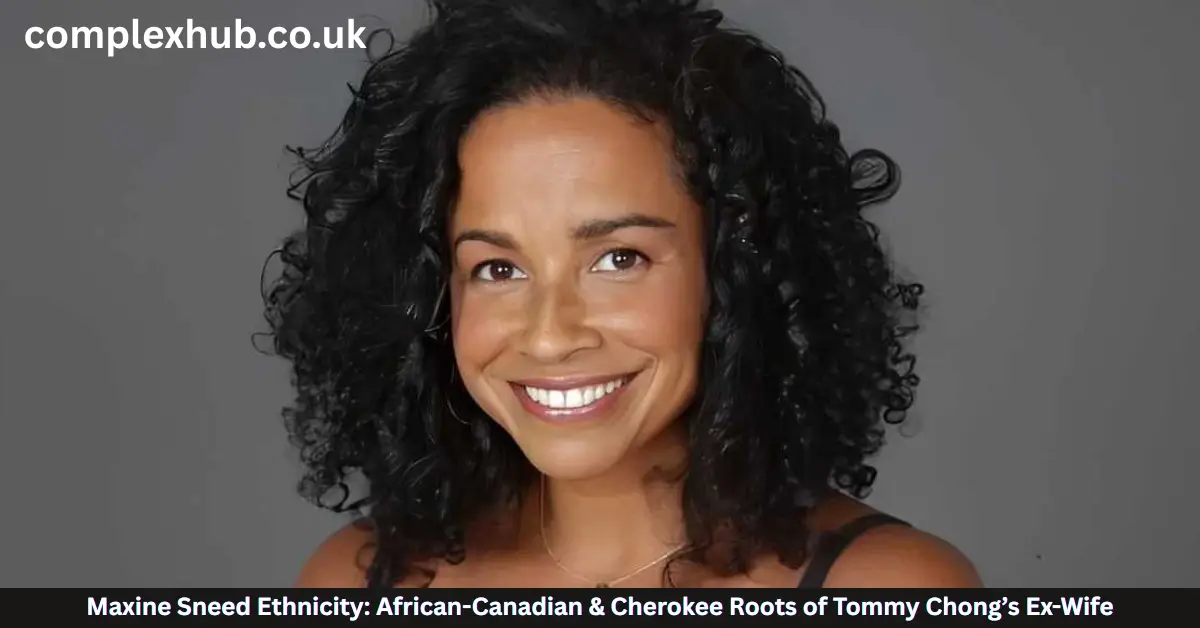
1. Introduction
When people search for “Maxine Sneed ethnicity” they’re usually trying to understand the cultural roots behind a family that sits at the intersection of multiple heritages: the Chongs (Tommy Chong’s line) and the Sneeds (Maxine’s). Maxine is best known publicly as the first wife of comedian and actor Tommy Chong and the mother of actresses Rae Dawn Chong and Robbi Chong — but her own background is notable in its own right. This article unpacks the evidence about her ancestry, explains what that mixed heritage meant for her family, and places those facts in historical and cultural context.
2. Quick Bio of Maxine Sneed
- Name: Maxine Sneed
- Nationality: Canadian (born and raised in Canada, family roots in Canadian Black communities).
- Known for: Former editor / journalist (frequently credited with editorial work connected to Black Radio Magazine in secondary sources) and as the first wife of Tommy Chong.
- Children: Rae Dawn Chong (b. 1961) and Robbi Chong (b. mid-1960s).
- Public profile: Private — few interviews or first-hand public statements from Maxine herself are available in major archives.
Note: many details circulating online (exact birth year, full family tree, or a formal CV) are not documented in primary public records. This article cites reputable reference entries where possible and notes when information comes from reliable secondary biographies.
3. Maxine Sneed’s Ethnicity Explained — the short answer
Available biographical references describe Maxine Sneed as having a mixed ethnic background commonly reported as African-Canadian (Black Canadian) and Native American (Cherokee) descent. In short: most reputable bios list her as Black Canadian with Cherokee ancestry, a combination that shaped family identity for her children.
Two important caveats:
- Public documentation is limited. Unlike celebrity biographies with interviews or autobiographies, Maxine herself kept a low public profile; most written accounts rely on family histories, secondary biographies, and reference works.
- Terminology matters. Sources sometimes use “African-American” or “Black Canadian” interchangeably when describing Canadian diaspora families; in this article I use Black Canadian / African-Canadian to reflect Canadian roots and migration histories reported for the Sneed family.
4. African-Canadian Roots of Maxine Sneed — historical context
A. Black communities in Western Canada
The Sneed family is part of a broader Black Canadian presence in the western provinces—communities that formed in places such as Amber Valley (Alberta) and other prairie settlements when Black settlers moved from the United States into Canada in the late 19th and early 20th centuries. These communities left a distinct imprint on regional culture and family lineages. Prominent Sneed family members (for example, drummer Floyd Sneed) are often connected to that western Canadian Black heritage.
B. What “Black Canadian” signals here
Calling Maxine “Black Canadian” (or Afro-Canadian) points to both ancestry and cultural upbringing in Canada’s Black communities rather than making a purely continental label. It reflects the migration, settlement, and musical/working communities that shaped families like the Sneeds. That Canadian Black identity likely influenced Maxine’s worldview and professional interests in Black media and culture.
5. Cherokee Heritage of Maxine Sneed — what sources say
Multiple bios and reference entries also attribute Cherokee (Native American) ancestry to Maxine. That detail is repeatedly mentioned in reputable reference sources describing family heritage — often in the context of describing Rae Dawn Chong’s mixed heritage (her maternal side being Black Canadian and Native American). While the precise genealogical documentation (tribal rolls or band enrollment) is not publicly available in the mainstream reference material, the repeated reporting across encyclopedic and biographical sources suggests a family oral history or genealogical claim linking the Sneeds to Cherokee lineage.
Important nuance: “Cherokee” here is a family-reported ancestry claim included in biographical references; it’s different from formal tribal enrollment records, which are private and not typically published without consent.
6. The role of ethnicity in Maxine Sneed’s life and career
A. Editorial interests and media representation
Several secondary biographies credit Maxine with editorial work — notably linked to Black Radio Magazine, a publication aimed at documenting and promoting Black voices in radio and media. Whether as staff editor or contributor, this connection (documented in multiple profiles and interviews about the family) fits naturally with someone raised in a Black Canadian milieu and invested in cultural representation.
B. Identity in private life vs. public perception
Maxine kept a low public profile, so her ethnicity and cultural background are often described indirectly — through family members’ careers and interviews. For example, Rae Dawn Chong’s biographies explicitly reference her mixed maternal ancestry, which is how the family’s ethnic story is most often told in public sources. That pattern — family history transmitted by children and public records — is common for private figures who themselves do not engage with the press.
7. Maxine Sneed and Tommy Chong: a cultural blend
When Maxine Sneed married Tommy Chong in 1960 they created a distinctly multicultural household:
- Tommy Chong’s background includes Chinese ancestry (paternal line) and Scots-Irish (part of his mixed European heritage), with roots in Canada — a blend often cited in profiles about him.
- Maxine’s background brought Black Canadian and Cherokee heritage into the family.
That mix produced children raised in a household where multiple cultural identities converged. In the 1960s and 1970s, in Canada and later in the U.S., that combination was relatively uncommon in popular culture — and it created a visible, diverse family that later surfaced through Rae Dawn and Robbi’s acting careers.
8. Children’s ethnic heritage: Rae Dawn Chong and Robbi Chong
Rae Dawn Chong
Rae Dawn Chong — the best documented public figure in the family — is consistently described in reference sources as having Chinese and Scots-Irish ancestry on her father’s side (Tommy Chong) and Black Canadian and Native American ancestry on her mother’s side (Maxine Sneed). These mixed roots have been noted in encyclopedias and long-form biographies of Rae Dawn.
Rae Dawn’s multiethnic identity has been part of how she’s been cast and discussed in Hollywood and film scholarship (for instance, in roles that have engaged with race and identity in the 1980s and 1990s). Her public interviews and profiles sometimes reference the complexities of growing up in a multicultural family.
Robbi Chong
Robbi Chong (younger sister) is also described as having the same blended heritage, with careers in modeling and acting that similarly reflect a family identity spanning Black, Native, and Asian/European ancestry. Sources discussing Robbi’s modeling and acting work also repeat the family heritage details attributed to Maxine and Tommy.
9. Public perception of Maxine Sneed’s ethnicity
Why the public is curious
- Celebrity networks: People often investigate the backgrounds of public figures; with a family that includes famous entertainers from multiple cultural backgrounds, curiosity about maternal heritage is natural.
- Representation conversations: In contemporary media, questions about ethnicity matter for representation and casting; thus Rae Dawn and Robbi’s mixed ancestry gets examined in that light, which reflects back on Maxine.
How the media reports it
Press and reference sites generally report Maxine’s ethnicity in similar terms (Black Canadian + Cherokee), but precision varies: some sites say “African-American” (a U.S.-centered term) while others correctly emphasize Black Canadian to reflect family roots in Canada. Reputable encyclopedic entries focused on Rae Dawn tend to be the most cautious and precise about lineage.
10. Maxine Sneed’s current life and cultural legacy
Current life
Maxine Sneed has largely stayed private in later life. There are no widely available, verifiable public interviews or official social-media accounts linked to her that discuss her heritage in detail. Most modern summaries of her life rely on family histories and secondary biographies. That privacy means public knowledge of her ethnicity rests on family statements and reference entries rather than a public memoir or direct testimony.
Cultural legacy
Maxine’s legacy operates through:
- Her daughters’ public profiles (Rae Dawn and Robbi), who brought visibility to their mixed heritage.
- Her professional connections (journalism/editorial work oriented to Black media), which, though less documented in mainstream archives, are repeatedly noted in profiles and serve as evidence of her interest in cultural representation.
Even as a private figure, Maxine’s mixed heritage and editorial work contributed to a family story with broad cultural resonance — bridging Black Canadian, Native American, and Asian/European traditions through three generations of public and private life.
11. How reliable is the public record? (Methodology & sources)
Because Maxine Sneed was not a high-profile public speaker or memoirist, much public information is aggregated from:
- Encyclopedic entries and published biographies about Rae Dawn Chong and the Chong family. These often summarize maternal ancestry and family histories.
- Biographical sketches and magazine pieces that compile family interviews and public records. These are useful but occasionally repeat the same summaries without original sourcing.
- Reference articles on related family members (for example, Floyd Sneed’s biographies, which provide family connections and geographical context for the Sneeds in Canada).
Bottom line: the consensus across reference sources points to Black Canadian + Cherokee maternal ancestry for Rae Dawn and Robbi — and that same consensus is the basis for identifying Maxine Sneed’s ethnicity — but gold-standard genealogical documents (e.g., birth certificates, tribal enrollment records) are private or not published in major archives. Thus, public claims rest on repeated, consistent family histories in reputable reference works.
12. Why Maxine Sneed’s ethnicity matters (beyond curiosity)
- Representation and casting: In Hollywood and media, perceptions of ethnicity shape roles and representation. Rae Dawn’s mixed heritage shaped how she and her sister were viewed by casting directors and the press.
- Cultural continuity: For families with diasporic histories (Black settlers in Canada, Native American connections, immigrant lines), public acknowledgment of heritage helps preserve histories that are often underdocumented in mainstream archives.
- Intersectional identity: Maxine’s story illustrates the layered, intersectional identities present in North America — Black Canadian, Native American, and the later Asian/European mix from Tommy Chong’s side — showing how families can embody multiple cultural legacies at once.
13. Conclusion
The best available public sources — encyclopedic biographies, reputable reference articles about Rae Dawn Chong, and family histories — consistently describe Maxine Sneed as African-Canadian (Black Canadian) with Cherokee (Native American) ancestry. That blended heritage shaped the multicultural identity of her daughters and contributed to the family’s cultural legacy. While Maxine herself remained private and direct primary documentation about her ancestry is limited in mainstream archives, the repeated reporting across trusted references gives a clear, consistent picture: Maxine’s ethnicity is a meaningful part of a multicultural family story that bridges Black Canadian, Native American, and Asian/European traditions.
14. FAQs (SEO-friendly)
Q: What is Maxine Sneed’s ethnicity?
A: Public biographies and encyclopedic sources consistently describe Maxine Sneed as Black Canadian (African-Canadian) with Cherokee (Native American) ancestry.
Q: Is Maxine Sneed Native American?
A: Sources attribute Cherokee ancestry to her maternal line — though formal tribal enrollment records are private, this family ancestry claim appears consistently in reference works.
Q: Is Maxine Sneed African-American or African-Canadian?
A: She is generally described as African-Canadian (Black Canadian) in biographies about her family; some U.S. sources may use “African-American” loosely, but Canadian sources emphasize Canadian roots.
Q: Who are Maxine Sneed’s children and what is their ethnicity?
A: Her daughters are Rae Dawn Chong and Robbi Chong, both described as having Chinese + Scots-Irish ancestry from their father (Tommy Chong) and Black Canadian + Cherokee ancestry from their mother (Maxine). 2
Q: Did Maxine Sneed work in media?
A: Several biographical profiles link her to editorial work (commonly cited as involvement with Black Radio Magazine), indicating a professional interest in Black media and cultural representation.
Read More :- PedroVazPaulo Crypto Investment