Alex Grey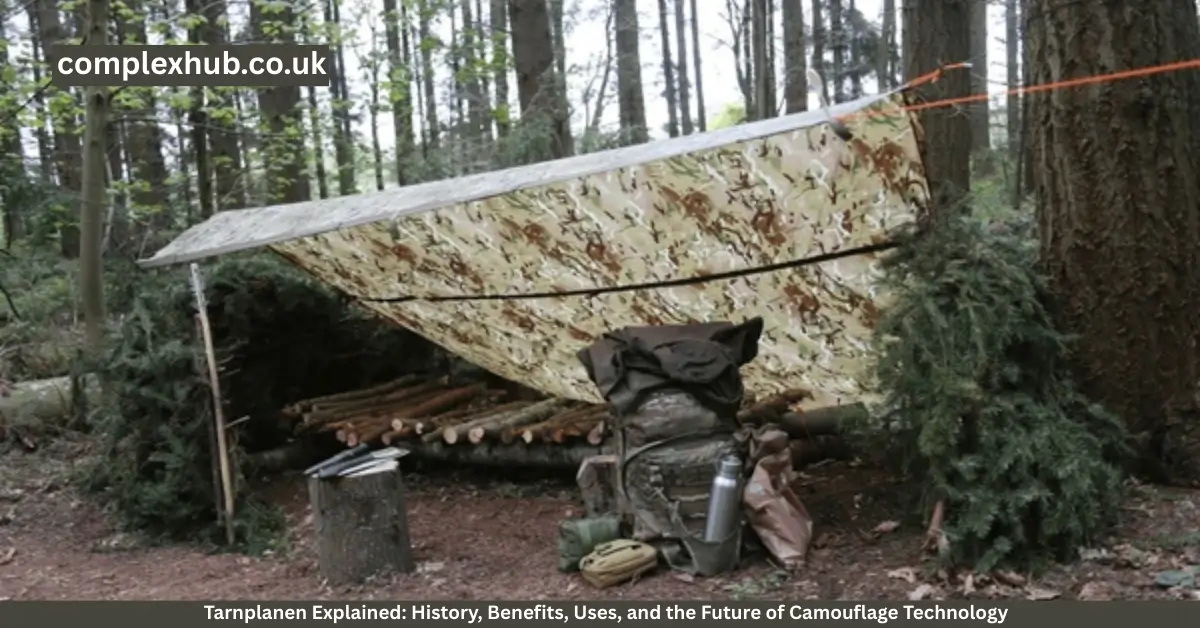
1. Introduction
Imagine a material capable of helping a person, vehicle, or shelter visually disappear into its surroundings—blending seamlessly into forests, deserts, snowy terrain, or even urban environments. Tarnplanen represents this vision of advanced concealment.
More than a simple camouflage pattern, Tarnplanen refers to a scientifically informed approach to visual disruption and environmental blending. It combines insights from perception psychology, optics, and material engineering to reduce detectability across diverse conditions.
This article explores Tarnplanen in depth—its definition, historical evolution, scientific foundation, real-world applications, limitations, and future potential—revealing why camouflage technology continues to matter in defense, conservation, outdoor exploration, and emerging smart materials.
2. What Is Tarnplanen?
At its core, Tarnplanen describes an advanced camouflage material, system, or methodology designed to conceal objects or individuals by disrupting visual recognition.
Unlike traditional camouflage prints (such as woodland or desert patterns), Tarnplanen emphasizes:
- Perceptual disruption rather than decoration
- Environmental adaptability across lighting and terrain
- Multi-spectral awareness, including near-infrared visibility
In practical terms, Tarnplanen may function as:
- A camouflage fabric for clothing or covers
- A concealment system for shelters, vehicles, or equipment
- A design philosophy rooted in scientific camouflage principles
Its goal is simple but powerful: reduce detection by matching and breaking up the surrounding visual environment.
3. History and Evolution of Tarnplanen
Early Natural Inspiration
Camouflage originates in nature’s survival strategies. Animals like chameleons, leopards, and stick insects evolved coloration and texture that help them avoid predators or ambush prey. Human camouflage design has long drawn inspiration from these biological systems.
World War I
Modern military camouflage accelerated during World War I, when trench warfare and aerial observation made concealment essential. Armies began painting artillery, uniforms, and installations to reduce visibility.
World War II
By World War II, camouflage had become a specialized discipline. Militaries developed:
- Disruptive fabric patterns
- Concealment training units
- Camouflage for vehicles and infrastructure
These advances laid the groundwork for systematic research into visual deception.
Post-War Innovation
Late-20th-century developments introduced:
- Synthetic fibers for durability and weight reduction
- Digital pattern generation using computer modeling
- Environmental simulation testing for effectiveness
Today, Tarnplanen represents the next evolutionary stage, integrating perception science, advanced materials, and multi-spectral considerations.
4. The Science Behind Tarnplanen
Visual Perception Disruption
Human vision detects objects through contrast, edges, and motion. Tarnplanen counteracts this by:
- Breaking up recognizable outlines
- Mimicking natural textures
- Balancing color gradients and shadow
This prevents the brain from quickly identifying shapes as human-made.
Spectral Awareness
Traditional camouflage works mainly in visible light. Tarnplanen design may also consider:
- Near-infrared reflectance (relevant for night vision)
- Multi-spectral observation systems
This expands concealment beyond what the naked eye sees.
Adaptive Concepts
Emerging research explores dynamic camouflage, inspired by cephalopods, that could:
- Shift coloration
- Adjust brightness
- Respond to surroundings in real time
These technologies remain experimental but signal the future of concealment.
Material Engineering
Effective Tarnplanen materials balance:
- Lightweight construction
- Weather resistance
- Breathability and flexibility
- Durability under field conditions
5. How Tarnplanen Works in Practice
Environmental Matching
Effective concealment depends on context awareness, including:
- Terrain colors across seasons
- Natural textures like foliage, sand, or rock
- Light direction and shadow patterns
Pattern Disruption
Instead of hiding perfectly, Tarnplanen creates visual noise that prevents clear recognition—similar to how pointillist art blends from a distance.
Deployment Forms
- Wearable garments
- Equipment or shelter covers
- Layered camouflage using natural materials
Correct placement and integration dramatically improve effectiveness.
6. Benefits of Tarnplanen
Enhanced Concealment
Science-driven design typically offers greater visual disruption than decorative camouflage prints.
Multi-Environment Versatility
Usable across:
- Forests
- Deserts
- Snowfields
- Urban terrain
- Coastal zones
Lightweight Portability
Modern fabrics support:
- Backpacking
- Field operations
- Wildlife observation
Durability
Engineered resistance to:
- UV exposure
- Moisture
- Abrasion
Long-Term Cost Efficiency
Extended lifespan can reduce replacement frequency compared to basic camouflage gear.
7. Real-World Applications
Military and Defense
Supports:
- Personnel concealment
- Equipment protection
- Covert maneuvering
Wildlife Observation
Enables:
- Undisturbed photography
- Behavioral research
- Reduced ecological impact
Outdoor Survival and Adventure
Useful for:
- Camouflaged shelters
- Observation blinds
- Temporary rest areas
Security and Surveillance
May assist low-visibility monitoring in controlled environments.
8. Using Tarnplanen Effectively
Key best practices:
- Match terrain colors and textures
- Avoid straight edges or unnatural shapes
- Incorporate local foliage or materials
- Practice deployment for speed and realism
Technique often matters as much as the material itself.
9. Tarnplanen vs. Traditional Camouflage
Traditional Camouflage
- Static visual patterns
- Limited environmental flexibility
- Primarily aesthetic disruption
Tarnplanen
- Based on perception science
- Designed for multi-environment effectiveness
- Potentially adaptive or multi-spectral
This marks a shift from decoration to functional concealment engineering.
10. Challenges and Limitations
- Rapid environmental change can reduce effectiveness
- Advanced materials may require maintenance
- Proper use involves a learning curve
- Thermal imaging, radar, and drones can bypass visual camouflage
Continuous innovation is necessary to keep pace with detection technology.
11. The Future of Tarnplanen
Nanotechnology
Could enable fabrics that:
- Dynamically change color
- Adjust reflectivity
- Improve concealment automatically
Smart Adaptive Camouflage
Sensor-integrated systems may respond to:
- Light levels
- Background color
- Movement
Civilian and Commercial Expansion
Potential influence in:
- Adaptive fashion
- Camouflaged architecture
- Vehicle and drone design
12. Industry Trends and Relevance
Broader market patterns show:
- Growing defense investment in stealth and concealment
- Expansion of outdoor recreation equipment markets
- Rising interest in wildlife photography and observation gear
These trends suggest sustained demand for advanced camouflage solutions.
13. Why Tarnplanen Matters Today
In a world shaped by technological surveillance, environmental awareness, and mobility, effective concealment supports:
- Safety
- Strategic advantage
- Responsible interaction with nature
Camouflage is no longer just about hiding—it’s about managing perception and reducing risk.
14. Conclusion
Tarnplanen represents a modern evolution of camouflage, combining historical lessons, scientific understanding, and advanced materials to achieve meaningful concealment.
From defense operations to wildlife research and outdoor survival, its versatility ensures continued relevance. As adaptive fabrics and smart materials emerge, Tarnplanen may become a cornerstone of future stealth and environmental integration technologies.
15. Frequently Asked Questions (FAQs)
1. What is Tarnplanen used for?
Visual concealment in defense, wildlife observation, outdoor survival, and security contexts.
2. How is it different from traditional camouflage?
It relies on scientific perception disruption rather than static printed patterns.
3. Does it work in every terrain?
Effectiveness depends on proper setup, environment matching, and conditions.
4. Can it defeat thermal or digital detection?
Not fully—though future adaptive materials may improve resistance.
5. What does the future hold?
Smart fabrics, nanotechnology, and expanded civilian applications.
Read More :- Gärningen