Introduction
In an online landscape ruled by algorithms, short attention spans, and viral soundbites, truly independent creative spaces are becoming rare. Yet the Blog Band Thorn-Magazine site stands as a refreshing countercurrent — a hybrid platform where music, long-form storytelling, and emotional depth converge.
Thorn-Magazine isn’t chasing trending hashtags. It isn’t built on sensational headlines or superficial listicles. Instead, it represents something more intimate and intentional: a digital creative ecosystem where writing is art, music is narrative, and community is central.
For indie music lovers, writers, cultural thinkers, and digital creatives, Thorn-Magazine offers more than content — it offers connection.
This renewed deep-dive explores:
- What Thorn-Magazine truly is
- The origins of its “blog band” identity
- Its philosophy and creative framework
- Its cultural relevance in today’s digital world
- And why it continues to matter
What Is the Blog Band Thorn-Magazine Site?
At its core, Thorn-Magazine is not simply a blog — and not quite a band in the traditional sense.
It is a hybrid creative collective that merges:
- Indie music experimentation
- Long-form narrative writing
- Digital zine aesthetics
- Cultural commentary
- Community dialogue
Unlike traditional music blogs that focus on reviews, news updates, or promotional cycles, Thorn-Magazine treats the blog itself as part of the artistic expression. Posts often read like chapters in an unfolding creative journey — blending reflection, sound, memory, and mood.
In essence, Thorn-Magazine is:
- A digital zine
- A storytelling-driven music platform
- A conceptual “blog band”
- A community hub for emotionally engaged audiences
Music is not just embedded media — it is woven into text, thought, and lived experience.
The Origins: From Underground Zines to Digital Renaissance
Thorn-Magazine’s DNA traces back to late-1990s and early-2000s underground blog culture — a time when indie creators used the internet as a tool for liberation rather than optimization.
Back then:
- DIY musicians self-published
- Writers launched independent zines
- Communities formed around niche genres
- Authentic voice mattered more than reach
Thorn-Magazine channels that ethos but adapts it to modern digital culture.
Its creators envisioned a platform where:
- Blogging functions like songwriting
- The website operates as a living canvas
- Music and prose are inseparable
- Digital presence feels human, not automated
In many ways, it represents a quiet rebellion against the commercialization of online creativity.
The Philosophy Behind Thorn-Magazine
At the heart of Thorn-Magazine lies a clear belief system:
1. Art Is Holistic
Music, writing, emotion, and reflection are interconnected. Creativity cannot be compartmentalized.
2. Authenticity Over Perfection
Raw emotional honesty matters more than slick production.
3. Community Over Metrics
Engagement is measured in meaningful dialogue — not follower counts.
4. Depth Over Virality
Lasting resonance outweighs momentary trends.
This philosophy shapes everything — from tone to layout to editorial choices.
Where mainstream platforms optimize for click-through rates, Thorn-Magazine optimizes for reflection.
Why It’s Called a “Blog Band”
The term “blog band” defines Thorn-Magazine’s unique identity.
It operates on two intertwined levels:
Blog as Performance
Writing is not commentary — it is performative art. Posts carry rhythm, tone, pacing, and emotional arcs similar to music.
Music as Narrative
Songs are contextualized within stories. Instead of isolated tracks, music is framed within memory, influence, and meaning.
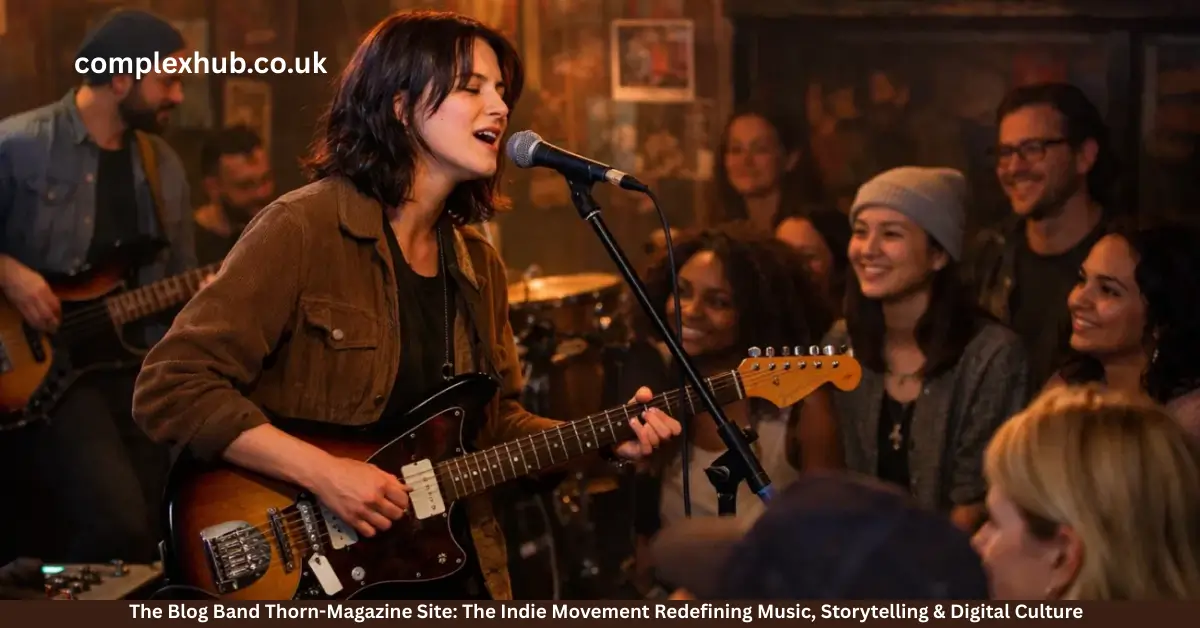
This duality creates an immersive experience — part indie concert, part literary reading.
The blog becomes a stage.
The writing becomes instrumentation.
The audience becomes participant.
Music Style and Sonic Identity
Though not a conventional touring band, Thorn-Magazine maintains a distinctive sonic aesthetic.
Its musical landscape often incorporates:
- Indie rock textures — introspective and emotionally layered
- Folk elements — storytelling through acoustic tones
- Ambient soundscapes — atmospheric and contemplative
- Lo-fi production — raw, imperfect, intimate
The sound complements the writing style: reflective, textured, and emotionally resonant.
Music here is not built for chart dominance — it is crafted for internal dialogue.
The Role of Blogging as Art
Blogging is foundational to Thorn-Magazine’s creative identity.
Posts are not merely informational. They function as:
- Essays
- Creative reflections
- Cultural meditations
- Emotional explorations
- Hybrid literary pieces
Recurring themes often include:
- The emotional memory of music
- The psychology of listening
- How sound shapes identity
- The intersection of creativity and mental health
- Cultural shifts in indie movements
Rather than asking “Is this song good?” Thorn-Magazine asks:
“What does this song unlock inside us?”
That shift changes everything.
Storytelling as the Core Experience
Thorn-Magazine embraces long-form storytelling — a rarity in fast-scroll culture.
Each piece often blends:
- Personal narrative
- Social reflection
- Artistic analysis
- Emotional vulnerability
Readers are invited into lived experiences:
- A memory tied to a track
- A relationship reframed through lyrics
- A moment of solitude defined by sound
The writing feels human — unfiltered, thoughtful, layered.
This literary depth distinguishes Thorn-Magazine from conventional review-based blogs.
Emotional Resonance Over Technical Critique
Mainstream music journalism often emphasizes:
- Production quality
- Chart performance
- Genre classification
- Industry trends
Thorn-Magazine shifts focus toward emotional resonance.
Instead of dissecting BPM or studio engineering, it explores:
- What a song feels like
- The atmosphere it creates
- The emotional landscapes it mirrors
- The inner dialogues it inspires
Music becomes a mirror, not a metric.
Honest Reviews and Cultural Commentary
When Thorn-Magazine publishes reviews, they are:
- Personal
- Unfiltered
- Reflective
- Contextual
There is no corporate neutrality — only lived perspective.
Beyond music, the platform also explores broader cultural intersections:
- The commercialization of indie culture
- Digital burnout and creativity
- Identity within underground scenes
- The psychology of art consumption
Its commentary feels reflective rather than reactive.
Major Creative Projects and Formats
Thorn-Magazine often organizes content into thematic or project-based formats, including:
- Audio-essay hybrids
- Narrative music features
- Long-form creative series
- Deep-dive genre explorations
- Story-integrated interviews
This approach reinforces its identity as an evolving creative organism rather than a static publication.
Each project builds upon previous pieces, forming a cumulative creative archive.
Digital Design and Community Culture
Thorn-Magazine’s digital presence reflects its philosophy:
- Clean, minimalist layouts
- Readable typography
- Evergreen content
- Thoughtful multimedia integration
Unlike sites cluttered with ads and pop-ups, its design encourages immersion.
Community interaction is equally important. Readers are encouraged to:
- Share reflections
- Contribute ideas
- Participate in dialogue
- Submit creative work
The result is not passive readership — but collaborative energy.
Cultural Impact in the Indie Space
Thorn-Magazine’s influence is subtle yet meaningful.
It:
- Challenges algorithm-driven publishing
- Revives digital zine culture
- Demonstrates the viability of slow content
- Encourages depth in online engagement
Its cultural footprint is measured less by viral spikes and more by sustained loyalty.
For many creatives, it represents proof that authenticity still resonates.
Challenges and Criticisms
Operating within indie frameworks presents hurdles:
- Limited mainstream visibility
- Financial sustainability challenges
- Niche audience appeal
- Conceptual complexity for new visitors
The “blog band” identity can require explanation — but that complexity is central to its originality.
Its refusal to simplify for mass consumption is both strength and limitation.
The Future of Thorn-Magazine
Looking ahead, Thorn-Magazine may evolve into:
- Multimedia storytelling experiences
- Collaborative digital workshops
- Interactive creative communities
- Hybrid audio-literary formats
- Experimental narrative albums
Its flexibility as a digital platform allows for continuous reinvention.
What remains consistent is its commitment to meaningful creativity.
Why Thorn-Magazine Still Matters
In an era of infinite scroll and diminishing attention spans, Thorn-Magazine proves:
- Music is felt, not just streamed.
- Writing can be sonic.
- Digital culture can remain intimate.
- Community can form around vulnerability.
It offers refuge for those seeking depth over dopamine.
For artists, it’s inspiration.
For writers, it’s affirmation.
For readers, it’s connection.
Conclusion
The Blog Band Thorn-Magazine site is more than a music blog. It is a living creative ecosystem — where sound meets story, where reflection meets rhythm, and where digital culture reclaims its humanity.
By blending indie music with literary storytelling and authentic community engagement, Thorn-Magazine stands as a modern revival of zine culture — reimagined for the digital age.
In a world optimized for clicks, it chooses connection.
In a culture chasing virality, it chooses vulnerability.
In a landscape of noise, it creates resonance.
And that is precisely why it matters.
Frequently Asked Questions
What is the Blog Band Thorn-Magazine site?
A hybrid digital platform combining indie music, long-form storytelling, and community engagement.
Is Thorn-Magazine an actual band?
Not in the traditional sense. It functions as a creative collective where blogging and music operate as interconnected art forms.
What makes it different from other music blogs?
Its integration of emotional storytelling, narrative depth, and reflective commentary sets it apart from mainstream review-driven sites.
Can readers contribute?
Yes. Thorn-Magazine encourages creative participation, dialogue, and community contributions.
Who is it for?
Indie music lovers, writers, digital culture thinkers, and anyone seeking depth over viral noise.
Read More :- Heather Carmillia Joseph