Alex Grey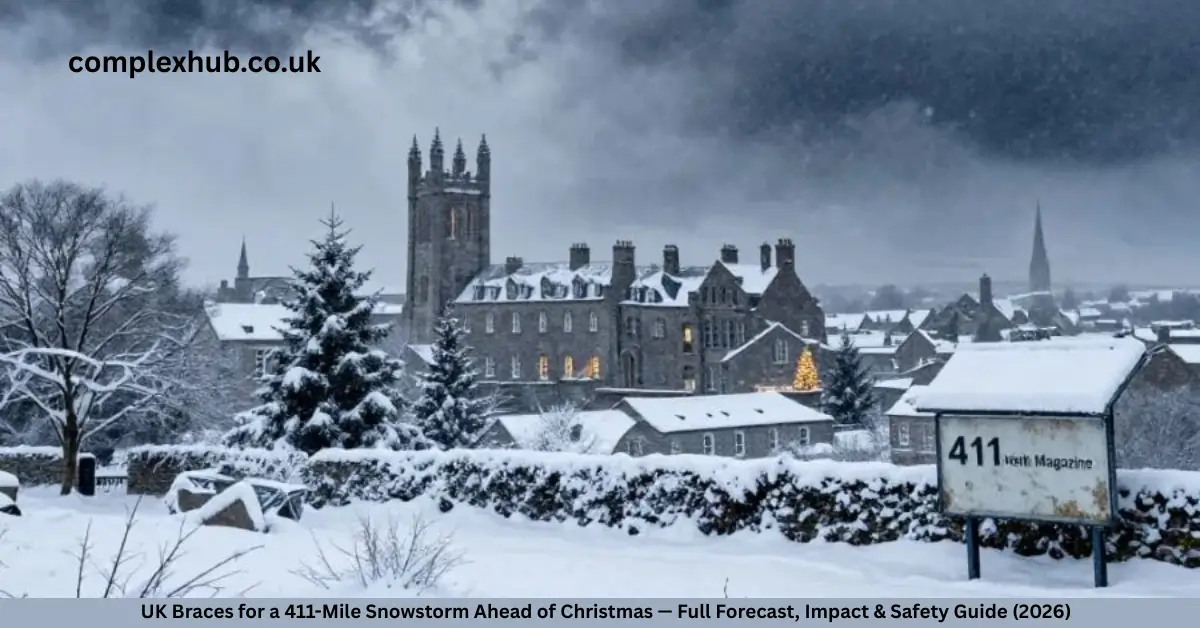
Introduction
As winter tightens its grip across the United Kingdom, meteorologists are warning of a large, potentially disruptive snow system developing in the run-up to Christmas. Forecast models suggest a vast band of wintry weather—stretching hundreds of miles across the country—could bring snowfall, freezing temperatures, strong winds, and travel disruption during one of the busiest travel periods of the year.
While a guaranteed white Christmas remains uncertain, current projections indicate that Scotland, northern England, Wales, and parts of the Midlands may face the greatest winter hazards in the weeks leading into the festive season.
This comprehensive guide explains the science behind the storm, expected regional impacts, travel risks, safety preparations, and what households should do now to stay protected.
What Is the “411-Mile Snowstorm”?
The term refers to a broad, slow-moving band of wintry weather forecast to span much of the UK rather than a single short-lived snowfall event.
Such systems typically form when:
- Cold Arctic air moves south toward Britain
- Moist Atlantic weather fronts push eastward
- The two collide, producing prolonged snow, sleet, or freezing rain
Early projections suggest:
- Sub-zero temperatures in Scotland
- Near-freezing conditions across northern England and Wales
- Milder but slushy conditions farther south
Why the UK May Face Severe Pre-Christmas Winter Weather
1. Southward Push of Arctic Air
Cold air descending from the Arctic can dramatically lower temperatures.
Rural and Highland Scotland could see deep frost and persistent snow cover, with some readings already dipping several degrees below freezing.
2. Atlantic Moisture Feeding Snowfall
Moisture from the Atlantic increases precipitation.
When this moisture meets freezing air, rain turns to snow, particularly in:
- Upland terrain
- Northern counties
- Exposed western regions
3. Lessons From Recent Cold Waves
Recent winters—including severe cold spells earlier this decade—demonstrate how quickly transport, energy supply, and daily life can be disrupted when prolonged freezing weather settles over the UK.
Forecast Models and Expected Conditions
Meteorologists combine satellite data, atmospheric pressure patterns, wind flow, and temperature trends to estimate storm behaviour.
Possible Snowfall Totals
Current model guidance suggests:
- Up to 12–15 cm (5–6 inches) in parts of Scotland and northern England
- Mixed snow and sleet across central regions
- Mostly rain or slush in southern England
Temperature Outlook
- Below-freezing nights across much of the UK
- Daytime highs in single digits Celsius
- Colder conditions persisting in the north
How Long Could the Snow Last?
Rather than a single storm day, forecasts indicate several waves of wintry weather arriving over:
- Multiple consecutive days
- Possibly a week or more of intermittent snow, frost, and ice
This prolonged pattern increases disruption risk compared with a brief snowfall.
Regional Impact Across the UK
Scotland & Northern England
Most severe conditions expected:
- Heavy snowfall and drifting in uplands
- Dangerous ice on untreated roads
- Travel disruption in rural communities
Midlands & Northern Ireland
Likely impacts include:
- Patchy snow and icy mornings
- Slower commuting and transport delays
Wales & Northwest Urban Areas
A rain-snow mix could still cause:
- Road congestion
- Rail delays
- Localised disruption in dense population centres
Southern & Southwest England
Generally milder but still unsettled:
- Rain, sleet, and occasional snow
- Strong winds and wind chill
- Sporadic icy surfaces overnight
Travel Disruption Risks Before Christmas
Roads
Snow and black ice create hazardous driving conditions, especially on:
- Rural or untreated routes
- Bridges and shaded areas
Drivers should expect longer journey times and possible closures.
Rail & Bus Services
Winter weather may cause:
- Frozen tracks or signal failures
- Cancelled or delayed services
- Route diversions for buses
Airports
Potential issues include:
- Runway de-icing delays
- Reduced visibility
- Disrupted ground operations
Travellers should check schedules frequently and allow extra time.
Possible Effects on Holiday Plans
Shopping & Deliveries
Snow may slow:
- Parcel deliveries
- Supply restocking
- Online order arrival times
Schools & Workplaces
Communities could see:
- Temporary school closures
- Increased remote working
- Cancelled public events
Preparing Your Home for Severe Winter Weather
Essential Emergency Supplies
Keep ready:
- Non-perishable food and bottled water
- Flashlights and spare batteries
- Warm clothing and blankets
- First-aid kit and charged power banks
Ensure heating systems are serviced before temperatures drop further.
Protecting Pipes and Heating
- Insulate exposed pipes
- Maintain steady indoor warmth
- Prepare backup heating if needed
Preparing Your Vehicle
A winter-ready car should include:
- Proper tyres and antifreeze
- Ice scraper and shovel
- Blankets, food, and water
- Jump leads and a charged phone
Avoid unnecessary travel during heavy snow.
Helping Children Stay Safe
Parents should:
- Provide waterproof, insulated clothing
- Plan for possible school closures
- Encourage safe indoor activities during icy conditions
Energy Use and Heating Costs
Cold snaps often increase household energy demand.
To conserve heat:
- Close curtains after dark
- Seal draughts
- Maintain efficient thermostat settings
Support schemes may assist vulnerable households during extreme cold.
Rain, Thawing Snow, and Flood Risk
Southern and western areas could face:
- Heavy rainfall
- Rising water levels
- Localised flooding after snowmelt
Clearing drains and securing outdoor items is advisable.
Community Support During Severe Weather
Simple actions help everyone stay safer:
- Check on elderly or vulnerable neighbours
- Share supplies where possible
- Follow local authority guidance
Will There Be a White Christmas?
Current forecasts suggest snow before Christmas is more likely than snow on the day itself.
A true white Christmas—defined as a snowflake falling on 25 December—remains uncertain and currently unlikely.
Outlook for January 2026
Seasonal guidance indicates:
- Continued cold and unsettled periods
- Intermittent snow or ice
- Occasional milder Atlantic air bringing temporary relief
Weather patterns may shift quickly, so ongoing monitoring is essential.
Final Verdict — What You Should Do Now
Before the Storm
- Monitor forecasts and warnings
- Prepare emergency supplies
- Ready your home and vehicle
During the Storm
- Stay indoors where possible
- Avoid unnecessary travel
- Check on vulnerable people nearby
After the Storm
- Watch for ice and hazards
- Travel cautiously
- Follow official updates
Preparation and awareness remain the best protection against winter disruption.
FAQs
Will the entire UK see heavy snow?
No. Northern and highland areas are most at risk; southern regions may see mixed precipitation.
Should I travel near Christmas?
Only if necessary—conditions may change quickly.
Could power outages occur?
Yes, especially in rural or heavily snow-affected areas.
Is a white Christmas guaranteed?
No—current forecasts suggest it is unlikely, though pre-Christmas snow is possible.
Read More :- WatchNewMovieNet.com