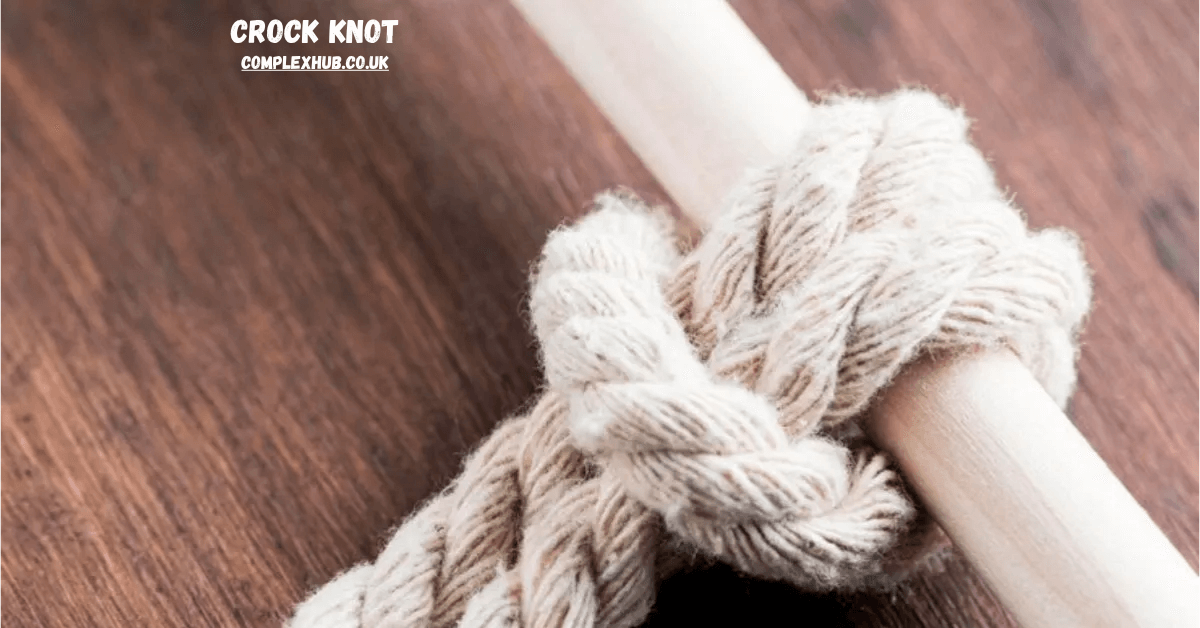
Explore the Crock Knot, a functional knot rooted in ancient craftsmanship and celebrated for its strength and ease. Whether in Ceramics/Pottery, sailing, or rescue operations, this tightly woven loop reflects ingenuity from Nomadic Cultures to today’s DIY Community.
What Is a Crock Knot?
The Crock Knot belongs to the Loop Knot Family and serves as a reliable binding knot to secure a rope to poles, logs, or anchor points. Unlike the Bowline Knot or Clove Hitch, its simplicity creates a secure fastening that’s also easy to untie—ideal for temporary yet dependable use.
Combining the working end and standing part in a swift knot-tying motion, the Crock Knot delivers knot stability without complexity. Compact, clean, and effective, it’s perfect for outdoor knot usage, everyday tasks, and even advanced rope techniques.
History and Origins of the Crock Knot
Sailors, craftsmen, and potters once relied on sturdy knots when transporting fragile Ceramics/Pottery. The name “Crock” likely references those eras—linking each rope twist to ancient rescue operations or moving fragile goods before ropes and pulley systems modernized.
Used for centuries by Nomadic Cultures and early Marine explorers, the Crock Knot became treasured by the DIY Community for its functional design. Rooted in human creativity, it connects us to generations of people who mastered loop creation long before standardized knot charts existed.
Key Characteristics of the Crock Knot
First, it’s incredibly fast and straightforward—a true Crock Knot tying tutorial in three steps—yet yields a secure fastening that resists slipping even under weight. This lightning-speed approach makes it usable for novices and experts alike.
Second, the knot balances secure hold with easy untie: it holds strong under tension like a double Crock Knot, but unravels with a quick tug. That reliability is a game-changer in camping, sailing, crafting, and emergency contexts.
Practical Applications Across Industries
Sailing and Marine Use
Boaters and Sailors treasure this knot for securing mooring lines or attaching gear. With Cock Knot strength, it holds in salt-spray environments and strong winds—knowing it’s dependable, yet adjustable.
Camping and Outdoor Utility
From tent setup to camping gear suspension, the knot shines with rugged simplicity. Its secure fastening keeps you safe, and easy release keeps you mobile.
Step-by-Step: How to Tie a Crock Knot
- Make a loose rope bight around an anchor point.
- Cross the working end over the standing part—forming an X.
- Wrap it again around the anchor, snug it tightly.
For more security, form a second loop—creating a Crock Hitch Knot or Crock Loop Knot to meet your exact needs.
Crock Knot Variations and Types
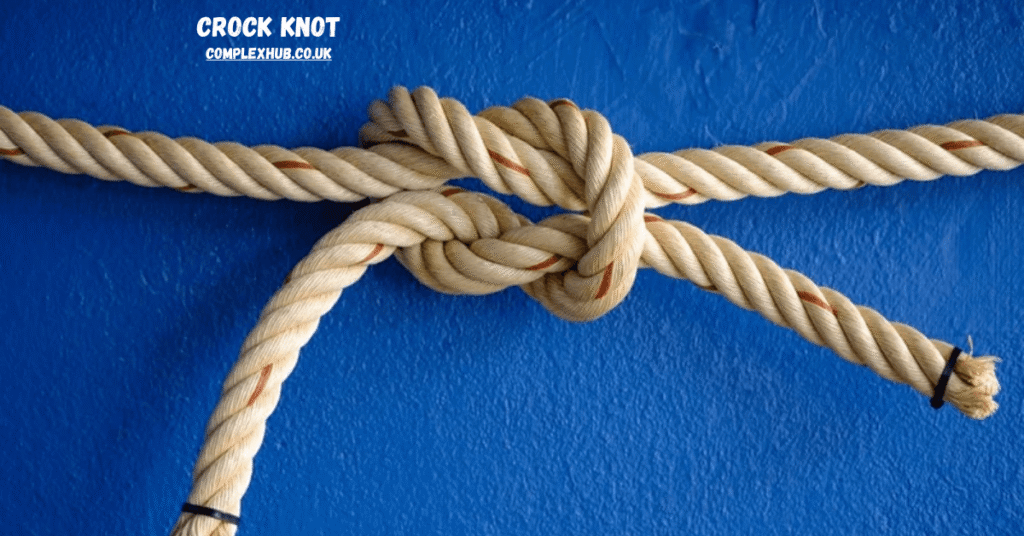
- Basic Crock Knot: Quick and secure.
- Double Crock Knot Benefits: Adds extra anchoring for heavier loads.
- Crock Hitch Knot: Ties to surfaces securely.
- Crock Loop Knot: Creates a stable loop, much like a Bowline, but faster to undo.
- Crock Bowline Knot: Combines Crock strength with fixed loop security.
Materials and Tools Required
You’ll need durable rope—think Nylon Rope or Polypropylene Rope—plus trusted tools like a Utility Knife, Rope Cutter, and Measuring Tape. Lay out your rope on a clear Work Surface, consult your Tutorial Manual, and inspect anchor points thoroughly.
Troubleshooting Common Crock Knot Issues
Knot Slipping? Check your wrap tightness and ensure a crisp working/standing part alignment.
Uneven Loops or Misaligned Turns? Use rope tools and measuring tape for consistent sizing. Practice loop creation until it aligns perfectly with each turn.
Why the Crock Knot Still Matters Today
In a world of gadgets, the Crock Knot is a trusty champion of functional design—a knot you can rely on, taught by sailors, craftsmen, and crafters. It builds confidence: every loop reminds you of human ingenuity and the simplicity of craft.
Final Thoughts
Condensing strength, simplicity, and versatility into each loop, the Crock Knot proves that the best solutions are timeless. From camping knots to rescue operations, this reliable knot inspires respect—and mastery. Trust it—and it will hold fast.
FAQs
Q1: What is a Crock Knot used for?
Ideal for securing rope to cylindrical objects—great in sailing, climbing, and DIY projects.
Q2: How do you tie a Crock Knot?
Wrap around, cross to form an X, wrap again, and tighten. Add a loop for extra grip.
Q3: Is a Crock Knot secure?
Very—for vertical loads. Heavy lateral loads? Try a Crock Bowline Knot or Clove Hitch.
Q4: Can the Crock Knot slip?
Minimal risk if tied properly. Prevent slipping by avoiding slack and uneven loops.
Q5: What are alternative knots?
Bowline Knot, Clove Hitch, Double Fisherman’s Knot—more secure under extreme stress.
Q6: Can beginners learn it easily?
Absolutely—thanks to its loop creation simplicity and fast learning curve.
Q7: Why use it over a Bowline Knot?
Faster to tie and untie; no need for intricate loops.
Q8: What materials work best?
Sturdy Nylon or Polypropylene rope, plus a utility knife and measuring tape.
READ ALSO: Financial Updates Aggr8Finance